

Cultural Immersion is Redefining African Travel in 2025
The African tourism sector has demonstrated exceptional resilience and growth in 2024, with international arrivals reaching approximately 74 million visitors—representing a 12% increase from 2023 and 7% above pre-pandemic 2019 levels. This monthly dashboard provides comprehensive insights into market performance, customer behavior, and competitive dynamics across major African destinations.
Key Performance Indicators
-
Total Market Value: $61.8 billion
-
Average Tourist Spend: $1,240 USD
-
Year-over-Year Growth: +12.5%
-
Recovery Status: 107% of pre-pandemic levels
Market Overview & Leading Destinations
Tourism Arrivals Performance 2024
The African tourism landscape is led by five key destinations, each offering a distinct value proposition and experiencing varying growth trajectories:
-
Morocco leads the continent with 17.4 million arrivals (+20%), capitalizing on its strategic position between Europe and Africa, with diverse offerings from imperial cities to Atlantic coastlines.
-
Egypt maintains strong performance with 15.7 million visitors (+6%), driven by cultural tourism and infrastructure developments, including the Grand Egyptian Museum.
-
South Africa recorded 8.9 million arrivals (+5.1%), positioning itself as the premier safari destination with the highest average spend per visitor at $1,200.
-
Tanzania achieved remarkable growth with 5.4 million arrivals (+20%), benefiting from Serengeti tourism and improved connectivity.
-
Kenya reached 2.4 million arrivals (+15%) and reported the highest average tourist spend at $1,800, reflecting its premium safari positioning.

Seasonal Patterns & Geographic Trends
Tourism Seasonality Analysis
Understanding seasonal demand patterns is key to optimizing pricing strategies and resource allocation:
-
July–August: Peak demand in East Africa (Kenya, Tanzania) during the Great Migration.
-
December–January: South Africa attracts high-spending visitors during its summer from Northern Hemisphere markets.
-
April–October: Morocco benefits from optimal weather conditions.
-
October–April: Egypt’s cooler months align with peak tourism.
Strategic Recommendations
-
Promote shoulder-season travel with 15–20% discounts.
-
Create multi-destination packages to balance seasonal peaks.
-
Leverage regional cooperation to align marketing with complementary tourism windows.
Customer Segmentation & Spending Behavior
Market Segmentation Analysis
The African tourism market consists of diverse customer segments with distinct spending habits and motivations:
-
Mid-Range Adventure Travelers (32% share): $1,800 average spend, 120-day lead time.
-
Family Travel (20% share): $2,200 average spend, 150-day lead time.
-
Luxury Safari Enthusiasts (18% share): $3,500 average spend, 180-day lead time.
-
Budget Backpackers (15% share): $800 average spend, 60-day flexible booking patterns.
Booking Behavior Trends
-
61–90 days advance booking is the most common (30%).
-
Last-minute bookings (0–30 days) are growing, especially in Egypt (+52%).
-
365+ day bookings are rising in luxury markets.
-
Longer lead times correlate with higher spending.
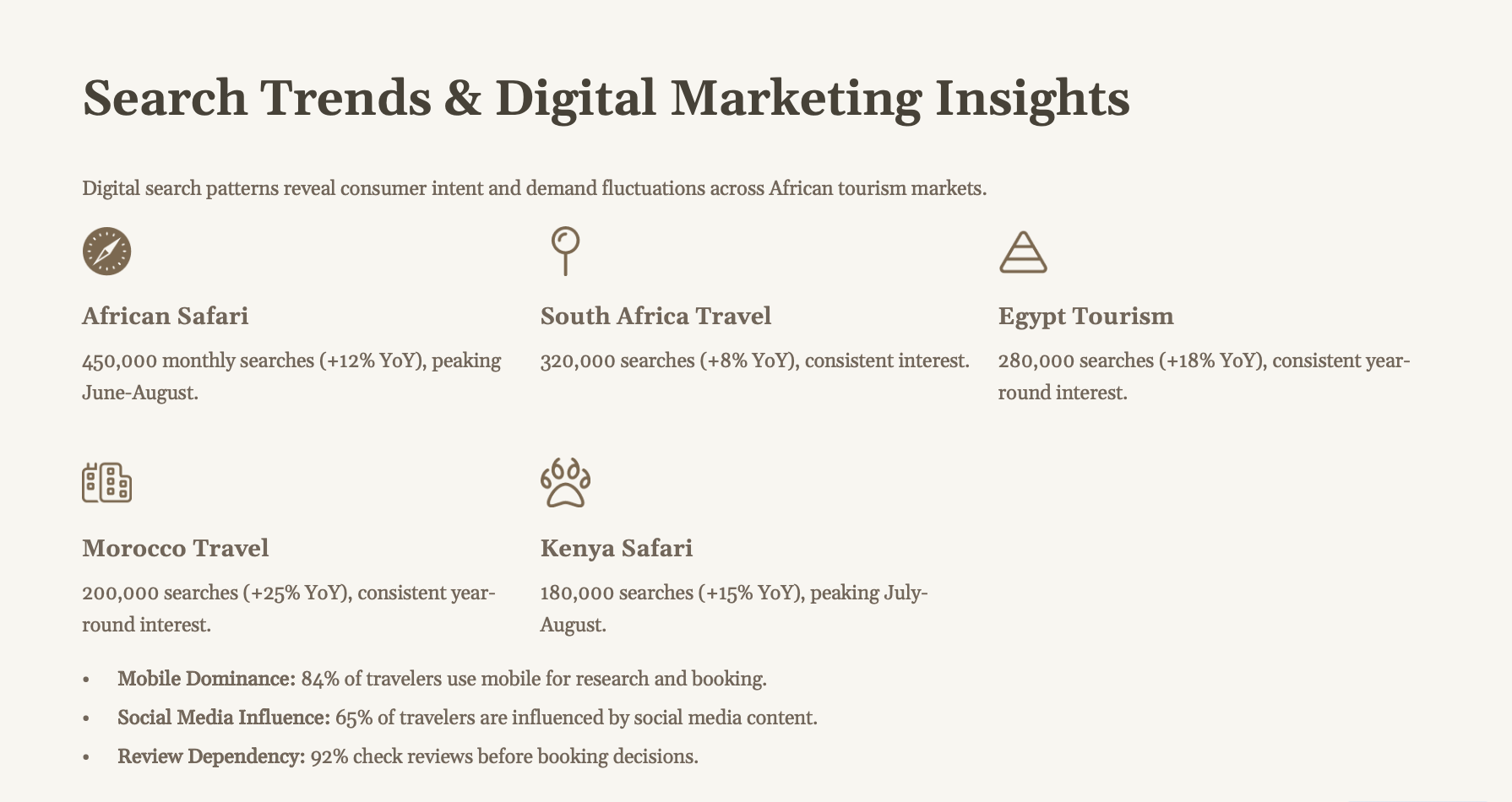
Search Trends & Digital Marketing Insights
Keyword Performance Analysis
Top Search Terms (Monthly Volume):
-
-
African Safari – 450,000 (+12% YoY)
-
South Africa Travel – 320,000 (+8%)
-
Egypt Tourism – 280,000 (+18%)
-
Morocco Travel – 200,000 (+25%)
-
Kenya Safari – 180,000 (+15%)
-
Key Insights
-
Peak search activity: June–August (Northern Hemisphere vacation planning)
-
84% of travelers use mobile devices for research and bookings
-
65% are influenced by social media content
-
92% check reviews before booking
Geographic Trends
-
Safari interest peaks July–August
-
Cultural tourism (Egypt & Morocco): Year-round interest
-
Adventure travel (Kilimanjaro, Victoria Falls): Trending upward (+14% and +10%)
Customer Segmentation & Behavior
Mid-Range Adventure Travelers (32%) – Avg. spend: $1,800; booking window: 120 days.
Family Travelers (20%) – Avg. spend: $2,200; booking window: 150 days.
Luxury Safari Tourists (18%) – Avg. spend: $3,500; booking window: 180+ days.
Backpackers (15%) – Avg. spend: $800; shorter booking window (60 days).
Booking Behavior
-
30% of bookings are made 61–90 days in advance.
-
15% are last-minute (0–30 days), especially in Egypt.
-
Luxury travelers show a strong correlation between longer lead times and higher spend.
Search & Digital Marketing Trends
Top Search Volumes:
African Safari – 450,000/month (+12%)
South Africa Travel – 320,000 (+8%)
Egypt Tourism – 280,000 (+18%)
Morocco Travel – 200,000 (+25%)
Kenya Safari – 180,000 (+15%)
-
84% of travelers use mobile devices for planning.
-
65% are influenced by social media.
-
92% read reviews before booking.
Competitive Landscape
-
Go2Africa (12% market share): Leads luxury safari segment with a customer satisfaction score of 4.8/5.
-
Intrepid Travel (11%): Strong in small-group sustainable travel.
-
G Adventures (10%): Targets younger adventure-focused markets.
-
Blueberry Travel: Regional leader with 7% share, named Africa’s Leading Travel Agency 2024.
-
Travelstart: Tech-driven OTA capturing 4% share via digital bookings.
Strategic Recommendations for Travel Agents
1. Revenue Optimization
-
Target high-margin segments (luxury, families, solo travelers).
-
Launch extended stay incentives and dynamic pricing during shoulder seasons.
2. Digital Marketing
-
Focus on SEO and high-volume keywords during peak search periods.
-
Optimize for mobile and use social proof like reviews and user-generated content.
3. Technology Integration
-
Implement AI-powered itineraries, real-time availability tools, and CRM systems for customer lifecycle tracking.
Market Opportunities
-
Emerging Destinations: Madagascar (+100%), Malawi (+55%), Seychelles (+71%).
-
Niche Segments: Wellness retreats, conservation tourism, cultural immersion, and adventure sports.
Risk Mitigation
-
Diversify across multiple countries.
-
Partner with insurers for comprehensive travel protection.
-
Strengthen relationships with ground handlers.
-
Offer flexible booking and cancellation policies.
Customer Segmentation & Behavior
Mid-Range Adventure Travelers (32%) – Avg. spend: $1,800; booking window: 120 days.
Family Travelers (20%) – Avg. spend: $2,200; booking window: 150 days.
Luxury Safari Tourists (18%) – Avg. spend: $3,500; booking window: 180+ days.
Backpackers (15%) – Avg. spend: $800; shorter booking window (60 days).
Booking Behavior
-
30% of bookings are made 61–90 days in advance.
-
15% are last-minute (0–30 days), especially in Egypt.
-
Luxury travelers show a strong correlation between longer lead times and higher spend.
Search & Digital Marketing Trends
Top Search Volumes:
African Safari – 450,000/month (+12%)
South Africa Travel – 320,000 (+8%)
Egypt Tourism – 280,000 (+18%)
Morocco Travel – 200,000 (+25%)
Kenya Safari – 180,000 (+15%)
-
84% of travelers use mobile devices for planning.
-
65% are influenced by social media.
-
92% read reviews before booking.
Competitive Landscape
-
Go2Africa (12% market share): Leads luxury safari segment with a customer satisfaction score of 4.8/5.
-
Intrepid Travel (11%): Strong in small-group sustainable travel.
-
G Adventures (10%): Targets younger adventure-focused markets.
-
Blueberry Travel: Regional leader with 7% share, named Africa’s Leading Travel Agency 2024.
-
Travelstart: Tech-driven OTA capturing 4% share via digital bookings.
Strategic Recommendations for Travel Agents
1. Revenue Optimization
-
Target high-margin segments (luxury, families, solo travelers).
-
Launch extended stay incentives and dynamic pricing during shoulder seasons.
2. Digital Marketing
-
Focus on SEO and high-volume keywords during peak search periods.
-
Optimize for mobile and use social proof like reviews and user-generated content.
3. Technology Integration
-
Implement AI-powered itineraries, real-time availability tools, and CRM systems for customer lifecycle tracking.
Market Opportunities
-
Emerging Destinations: Madagascar (+100%), Malawi (+55%), Seychelles (+71%).
-
Niche Segments: Wellness retreats, conservation tourism, cultural immersion, and adventure sports.
Risk Mitigation
-
Diversify across multiple countries.
-
Partner with insurers for comprehensive travel protection.
-
Strengthen relationships with ground handlers.
-
Offer flexible booking and cancellation policies.


